
So, due to the fact I haven't had exposure to any new games recently (due to not buying them, among other things), I thought I'd use the past two weeks to reflect on games that I've spent a large amount of time on. Games I keep returning to.
PC:
Total Annihilation: I've spoken before about Total Annihilation. It's a game I've always loved, even from before I had a computer that could actually run it properly. I have fond memories of playing skirmish battles and only building air units and just bombing everything I could find. I've recently discovered there's a fully 3D remake called "Spring" available (it even runs on Linux!), so I shall be looking into that soon.
Worms 2: A game I will definitely never get tired of. I even have a version of it on my old phone. The humour and the fun of the damage you can cause when using suicidal tactics is great. Also one of the few games I've ever completed, though with only 17 short missions, this is no great feat.
Dreamcast:
Shenmue: Now almost 9 years old, this game still stands up as excellent. Games like GTA might have made the idea of a fully explorable environment somewhat commonplace, but Shenmue is still great, thanks to an excellent storyline and great characters. It really saddens me that Shenmue 3 (and thus the end of the Shenmue saga) will likely never see the light of day.
Soulcalibur: Like driving games, I've always enjoyed fighting games on a basic level, but I've never been that good at them. While I'm still not exactly great at Soulcalibur (I still get beaten in multi-player games fairly often), I've managed to complete a fair amount of the missions (though they are fairly one-dimensional, you're fighting someone, just the why or how changes) and I've made it through arcade mode a few times. I mostly play for enjoyment, rather than because I feel the need to complete and unlock everything.
Playstation 2:
Canis Canem Edit: Another of the few games I've actually completed (storyline-wise, at least). The storyline and the humour of this game just make it insanely fun to play and quite addictive to boot. One of the best parts of the game is how the richness of the environment really encourages you to explore and do things your way. This definitely ties into my post on narratives as while there is a definite pre-defined story but it allows you to explore that story with a great degree of freedom.
Kingdom Hearts: Again, a game where the story and the characters are the draw. The great part is that while most of the characters are familiar, they're used in interesting and new ways and the story of the game is still very strong.
Burnout 3: I think I've said enough about this game before. Definitely another game I've become addicted to. The lure of just doing one more race is something that can easily eat away at my time...
Showing posts with label kingdom hearts. Show all posts
Showing posts with label kingdom hearts. Show all posts
Sunday, 6 April 2008
Saturday, 22 March 2008
Shush you, I'm writing you a poem
This week, I'm looking at narratives. In all the reading I did, there were certain key questions that came up; things like "Are (all) games narrative?", "Do games need narratives?", and "How can narratives be interactive?". These questions mostly seemed to end up unanswered or answered in unsatisfactory ways.
To look at the relationship between games and narratives, I'm going to look at a couple of extremes. First, is Tetris. Tetris has no narrative. There's no story telling you why you need to move these blocks around and make lines disappear and there's nothing to recount to people outside of the game (except maybe a particularly high score) as no one wants to hear exactly where you put the L-shaped block or whatever. So this seems to easily answer the question of whether games need narratives. But then what happens when games become more complex? If you removed all the story and characterisation and description from even a games as simple as Doom (walk around, shoot things, occasionally solve simple puzzles), what would be the point? The enjoyment of Tetris is in quick and logical thinking, whereas in Doom, it's being able to shoot various monsters. Though for this, you don't need an in-depth story.
To go to the other extreme, you can look at a game like Zork. Without any narrative, a text-only game like Zork becomes utterly pointless. The game relies on description for everything. But the narrative is still incomplete, your character is never described and the motives behind your "adventures" are never given. So even in a game that needs narrative, this can be incomplete.
Of course, there are more modern games where the narrative really is everything. Games like the Final Fantasy series are all about the story and because of this become much less of a game and more like a film where you push buttons occasionally (something I've mentioned before when comparing Final Fantasy X to Kingdom Hearts). There are other games where the narrative is more flexible. The story is defined and so are certain events, but things like the sequence of events and how certain tasks are carried out can differ from player to player. Most games will have only one ending/way of "winning", whereas games like Fable or Knights of the Old Republic are much more affected by the player.
Then there's games like The Sims, which are as open as possible. Instead of defining a story and making the player try to complete that story, the game developers create a world and give the player the tools with which to create their own stories.
Games like The Sims highlight how narratives in games are different to those in film or literature. In the latter, the writer controls everything and the viewer/reader is passive. They are told the story and that is that. In game narratives, the writer builds a world. They then choose their control over the "history" of the world. Whether everything is prescribed (like in Final Fantasy) or whether everything is open (like in The Sims). The player then dictates
how they experience this history. In a fully prescribed history, every player will have the same story, but it will be tempered by how difficult it was for them to discover. In an unprescribed history, each player will have their own history, but there will always be common elements as they are all in the same created world.
The problem with most analyses of game narratives is that they're compared to standard narratives of film or literature. They try to see the writer as active and the reader/player as only passive. The control the player has over their experience confounds this view. Much better is to see the player as experiencing the story in a "writerly" fashion. The game's creators/writers have put the story to them, but it is up to the player to give the story meaning and to create their own experience.
Imagine a game as a series of books. You can read these books in any order but parts of certain books rely on other books. So, you can read the books detailing certain events at any time you like, but you need to first read the book that explains who the characters are and why they do certain things (or maybe you don't, such as in Zork). Some of the books you could skip completely as they aren't needed for you to know the main plot, but maybe they are of interest because they reveal extra details about the characters or they could simply be about something enjoyable. Others would be major books that tell of major events that would result in a very boring story otherwise. Imagine the story of Star Wars as this series of books. You can skip the books where Obi-Wan uses his Jedi powers to influence the Stormtroopers or where he cuts off the arm of the alien in the bar as, while they are important, you can know the story without them. In contrast, you can't skip the book where Luke destroys the Death Star, otherwise there's no (major) ending to the story.
So, once again, the questions I began with have gone unanswered. Games can be narrative, but they don't need to be. More important is whether players want them to be (Tetris could have a story, but I doubt anyone would want to read it). Game narratives can be interactive because they're not the same as films or books. Just as a "writerly" view of reading means the reader defines the meaning of a piece, the player defines their experience of a game.
To look at the relationship between games and narratives, I'm going to look at a couple of extremes. First, is Tetris. Tetris has no narrative. There's no story telling you why you need to move these blocks around and make lines disappear and there's nothing to recount to people outside of the game (except maybe a particularly high score) as no one wants to hear exactly where you put the L-shaped block or whatever. So this seems to easily answer the question of whether games need narratives. But then what happens when games become more complex? If you removed all the story and characterisation and description from even a games as simple as Doom (walk around, shoot things, occasionally solve simple puzzles), what would be the point? The enjoyment of Tetris is in quick and logical thinking, whereas in Doom, it's being able to shoot various monsters. Though for this, you don't need an in-depth story.
To go to the other extreme, you can look at a game like Zork. Without any narrative, a text-only game like Zork becomes utterly pointless. The game relies on description for everything. But the narrative is still incomplete, your character is never described and the motives behind your "adventures" are never given. So even in a game that needs narrative, this can be incomplete.
Of course, there are more modern games where the narrative really is everything. Games like the Final Fantasy series are all about the story and because of this become much less of a game and more like a film where you push buttons occasionally (something I've mentioned before when comparing Final Fantasy X to Kingdom Hearts). There are other games where the narrative is more flexible. The story is defined and so are certain events, but things like the sequence of events and how certain tasks are carried out can differ from player to player. Most games will have only one ending/way of "winning", whereas games like Fable or Knights of the Old Republic are much more affected by the player.
Then there's games like The Sims, which are as open as possible. Instead of defining a story and making the player try to complete that story, the game developers create a world and give the player the tools with which to create their own stories.
Games like The Sims highlight how narratives in games are different to those in film or literature. In the latter, the writer controls everything and the viewer/reader is passive. They are told the story and that is that. In game narratives, the writer builds a world. They then choose their control over the "history" of the world. Whether everything is prescribed (like in Final Fantasy) or whether everything is open (like in The Sims). The player then dictates
how they experience this history. In a fully prescribed history, every player will have the same story, but it will be tempered by how difficult it was for them to discover. In an unprescribed history, each player will have their own history, but there will always be common elements as they are all in the same created world.
The problem with most analyses of game narratives is that they're compared to standard narratives of film or literature. They try to see the writer as active and the reader/player as only passive. The control the player has over their experience confounds this view. Much better is to see the player as experiencing the story in a "writerly" fashion. The game's creators/writers have put the story to them, but it is up to the player to give the story meaning and to create their own experience.
Imagine a game as a series of books. You can read these books in any order but parts of certain books rely on other books. So, you can read the books detailing certain events at any time you like, but you need to first read the book that explains who the characters are and why they do certain things (or maybe you don't, such as in Zork). Some of the books you could skip completely as they aren't needed for you to know the main plot, but maybe they are of interest because they reveal extra details about the characters or they could simply be about something enjoyable. Others would be major books that tell of major events that would result in a very boring story otherwise. Imagine the story of Star Wars as this series of books. You can skip the books where Obi-Wan uses his Jedi powers to influence the Stormtroopers or where he cuts off the arm of the alien in the bar as, while they are important, you can know the story without them. In contrast, you can't skip the book where Luke destroys the Death Star, otherwise there's no (major) ending to the story.
So, once again, the questions I began with have gone unanswered. Games can be narrative, but they don't need to be. More important is whether players want them to be (Tetris could have a story, but I doubt anyone would want to read it). Game narratives can be interactive because they're not the same as films or books. Just as a "writerly" view of reading means the reader defines the meaning of a piece, the player defines their experience of a game.

Friday, 1 February 2008
24/01/08 - 31/01/08
Games I've been playing this week:
 Kingdom Hearts: Been playing this for a while and I still love it. I'm currently on the Atlantica (Little Mermaid) level. It's not too hard, so I don't get frustrated, but it's not like Final Fantasy X where I feel like I may as well just be watching a film so I could do away with having to press some buttons...
 X-men Legends: An X-men RPG? I am quite obviously in heaven. The 2-player mode is great too, as it's a welcome change to be working with a partner rather than against them. Especially enjoyed the part of a mission where pretty much everything could be destroyed...
 Capcom Vs. SNK 2: A very frustrating game. The controls are simple (like most fighting games), but getting to do anything other than simple moves is a lot more difficult. We read through the instructions multiple times and still had no idea. Not to mention having no clue what the various "grooves" did...
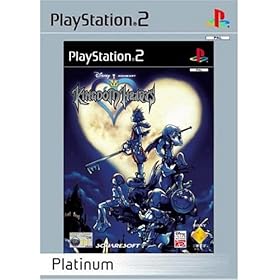 Kingdom Hearts: Been playing this for a while and I still love it. I'm currently on the Atlantica (Little Mermaid) level. It's not too hard, so I don't get frustrated, but it's not like Final Fantasy X where I feel like I may as well just be watching a film so I could do away with having to press some buttons...
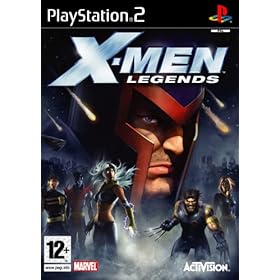 X-men Legends: An X-men RPG? I am quite obviously in heaven. The 2-player mode is great too, as it's a welcome change to be working with a partner rather than against them. Especially enjoyed the part of a mission where pretty much everything could be destroyed...
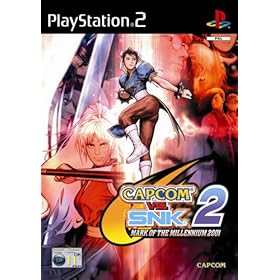 Capcom Vs. SNK 2: A very frustrating game. The controls are simple (like most fighting games), but getting to do anything other than simple moves is a lot more difficult. We read through the instructions multiple times and still had no idea. Not to mention having no clue what the various "grooves" did...
Subscribe to:
Posts (Atom)
